
By Valarie Adams · October 20, 2026
How Should a San Antonio Seller Stage the Primary Bedroom for Listing Photos?
The primary bedroom is one of the rooms most often staged, and it is also the room sellers live in right up to photo day. Here is how to get it camera ready without emptying it.
Why does the primary bedroom deserve staging attention?
Because it is a room the listing photos need to show well, and it is also the room you sleep in right up to photo day. That makes it easy to leave the bedroom for last and run out of time.
NAR's 2025 Profile of Home Staging lists the primary bedroom among the rooms most commonly staged, along with the living room and dining room. NAR's staging resource page adds a related point. It names bedrooms among the areas with a larger impact on buyers and suggests focusing there when time and resources are limited.
Put those two together and the primary bedroom earns a place near the top of your list. Staging it does not guarantee anything about how a particular buyer will respond. It gives the photographer a clean, well-arranged room to work with, which is the part you control.
So treat the primary bedroom as a priority room, right behind the main living area. If your budget only covers a consultation, ask the stager to walk this room with you first.
A good order of work keeps it manageable. Pack the closet and dresser tops a week out, settle the bed and nightstand plan a few days out, and save the bedding, lamps and final clearing for the day before. That way the room is livable until the end and ready when the camera arrives.
Is the bed the right size and in the right spot?
Start with the bed. When it is the largest piece in the frame, its size and position set how big and balanced the room looks in the photo.
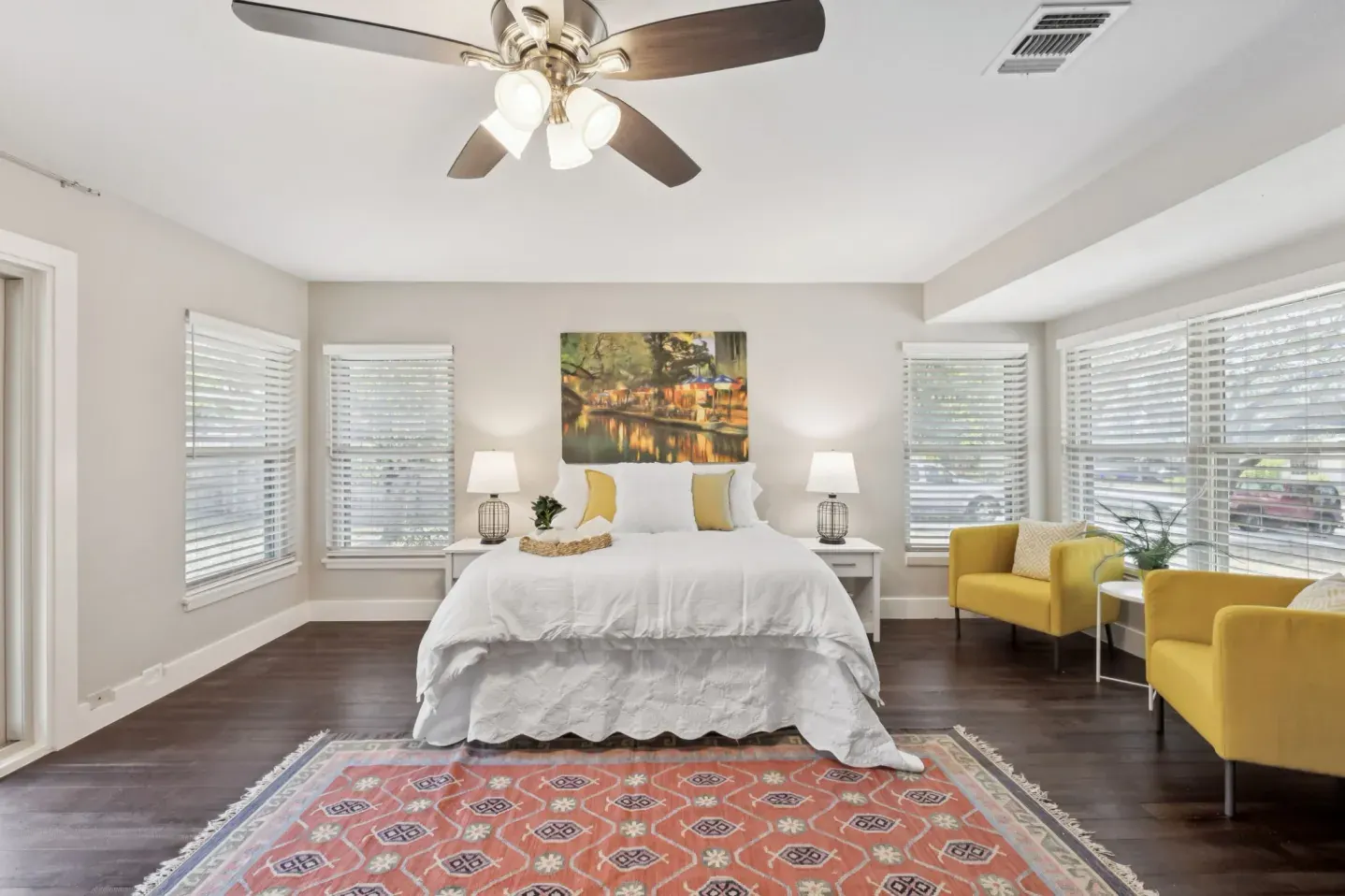
Put the bed on the longest solid wall, centered, with the headboard against the wall and a clear path on both sides. If the bed sits under a window or in a corner because that is how you live, try the wall the photographer will face when shooting from the doorway.
Look at what else is on that wall. A TV mounted across from the bed, a treadmill in the corner or a desk wedged beside the dresser all compete with the bed for the photo. If a piece of furniture does not support sleeping, dressing or a reading spot, move it out for photos.
Check the scale. A full-size bed in a large primary suite can make the room look underfurnished. An oversized bed squeezed between two dressers can make a good room look tight. If the bed you own is the wrong size for the room, that is a strong reason to bring in a stager's bed and frame for photos, even if you keep living with your own furniture until listing day.
Make the bed simple. White or light bedding, two sleeping pillows, a couple of accent pillows and a throw across the foot is enough. Skip patterned sheets, electric blankets and anything with visible cords. Smooth it all down the morning of the shoot.
A small seating spot can help a large primary bedroom feel finished. One chair and a side table by the window, or a bench at the foot of the bed, gives the room a second purpose without crowding it. In a smaller room, skip it and give the bed its space.
What should stay on the nightstands and dressers?
Less than you think. Each nightstand needs a lamp and maybe one small item, like a plant or a short stack of books. Everything else goes into a drawer or a bin that leaves the room.
Match the pair if you can. Two lamps of the same height, with shades the same color, give the camera a balanced frame around the bed. Mismatched or missing nightstands are one of the easiest fixes a stager can bring.
Clear dressers down to one or two pieces. Remove family photos, medications, chargers, jewelry trays, mail and anything with a name or address on it. That is both a staging step and a privacy step, because listing photos can stay online after you move.
Turn on the lamps for photos and use bulbs that match. A lamp with a cool bulb next to one with a warm bulb shows up as two different colors in the picture. Turn off the TV, and ask your photographer how they want the overhead light set and whether the ceiling fan should be off before the shoot.
Art over the bed should be one piece, or a simple pair, sized to the headboard. If you have a gallery wall of family photos there, take it down and patch the nail holes before the shoot. A bare wall reads better than a cluttered one.
Think about the view from the doorway when you set the lamps. A lamp crowded by a tall plant or a pile of small items looks like clutter from across the room. Keep the area around each lamp clear so the light reads as part of the setup.
How do you handle closets, windows and the floor?
Edit the closet as if a buyer will open it, because at a showing someone may. Pack out-of-season clothes, shoes on the floor and anything stored on the top shelf. Leave enough room that the hangers slide and the doors close without pushing. Keep shoe racks and laundry baskets out of the photo angle.
Open the window treatments and clean the glass. Natural light helps the room photograph brighter and more open. If the view is a fence or a neighbor's wall, open the blinds partway and let the room light carry the shot instead.
Clear the floor completely. Laundry, exercise equipment, pet beds and storage bins all need a new home before photo day. A simple rug that fits under the front of the bed can help on tile or wood, but skip small throw rugs that break up the floor.
Walk the room from the doorway with your phone camera at chest height. Anything that pulls your eye in that test picture is worth moving before the photographer arrives.
Do the same check for the bathroom door. If the bathroom is visible from the bedroom, it can show up in the bedroom photo. Close the door, or clear the counter and hang one set of matching towels so the view through the doorway looks finished.
Check the ceiling and walls while you are at it. Replace any burned-out bulb in the ceiling fixture, dust the fan blades, and touch up scuffs where furniture has rubbed the wall. These are small jobs you can finish the week before photos.
When should you bring in staging help for this room?
Bring in help when the room has a problem you cannot fix with your own furniture. Examples include a bed that is the wrong size for the room, no matching nightstands, dated or heavy furniture that makes the room feel small, or a primary suite you have been using as an office or storage room.
A staging consultation fits when the furniture mostly works and you need a plan for what to remove and where to move it. Occupied home staging can fit when the room needs replacement pieces, like a properly sized bed, lamps, bedding and art, while you keep living in the house.
If you want a second opinion before you spend anything, take three phone photos from the doorway and each corner, then share them with your stager or Realtor. Those pictures give them enough to suggest whether the room needs a few edits or a fuller plan.
Talk to your Realtor about timing before you book. If the bedroom will be the last room you finish before photos, plan where you will sleep and where packed items will go during the shoot. If you are moving out before listing, ask how vacant staging would handle the primary suite.
Whichever route you choose, finish the room the day before photos, then do a final reset that morning. Make the bed, clear the nightstands, open the blinds and turn on the lamps.
Related home staging services
Sources
How Should a San Antonio Seller Stage the Primary Bedroom for Listing Photos? FAQs
Do I need to stage every bedroom?
Not always. NAR's staging research lists the primary bedroom among the rooms most commonly staged. Start there, then look at secondary bedrooms that have a clear purpose problem, such as a room used for storage.
Can I keep living in the bedroom while it is staged?
Yes. Occupied staging is built for that. Plan a nightly reset and a final reset the morning of photos and showings.
What size bed looks right in listing photos?
One that fits the room with a clear path on both sides and room for nightstands. If yours is noticeably too small or too large for the room, ask a stager about a temporary bed for photos.
Should I remove family photos from the bedroom?
Yes. Clearing personal photos and anything with names or addresses helps the room photograph cleanly and keeps private details out of listing photos that stay online.